The future of food is rooted in soils
-
Mycorrhizae are fungi that form a mutualism with plants. They attach to tiny roots and extend their fungal hyphae into the soil, the collection of these hyphal threads are also known as mycelium. Mycelium extends into areas that plant roots may not reach to uptake and transfer nutrients to their plant host in exchange for carbon that is sourced through plant photosynthesis. Scientific literature highlights how important these tiny players are in plant health, and this association dates all the way back to early land-plant evolution.
Think about humans, we need food for energy, and fungi do too. Mycorrhizal fungi depend on an bidirectional exchange with plants to source their food!
-
These cool little microscopic bugs are also known as diazotrophs. They have the ability in their genetic make-up to convert atmospheric nitrogen gas (N₂) into bioavailable nitrogen (aka available for plant uptake, such as ammonia NH₃). Not all bacteria can fix nitrogen, and those that can are not always doing so, because it is an energy intensive process. However, in healthy soils, diazotrophs can significantly drive soil nitrogen inputs.
Think about all that nitrogen gas in the atmosphere (~78%), only diazotrophs are capable of unlocking it into the soil through biological nitrogen fixation.
-
These tiny bugs are powerful because they can excrete acids that mobilize bound soil phosphorus… Which leads into the story of phosphorus! Phosphorus is a finite resource and the way it moves through soils is very complex! In many cases, shortly after phosphorus is applied to soils, it gets bound-up in chemical and physical processes (aka stuck!) and is not available to plants. Science discoveries are showing that many bacteria are capable of mobilizing these bound phosphorus particles into forms that are easier for plants, and their fungal partners, to uptake.
-
Oh, the complexity of the organisms we can’t see! In technical terms, nitrogen-fixing and phosphate solubilizing bacteria could be considered plant-growth promoting bacteria… If they don’t negatively impact plant growth. However, there are also bugs that can produce phytohormones (like auxins and cytokinins) that benefit plant development. To make it even more complicated, one bug could be a diazotroph that can produce auxins under certain conditions.
The more we research, the more we find out about the diverse functions of different microbes. There is even research on bacteria that benefit mycorrhizal fungi that increase plant growth. The range of interactions in soils are vast!
-
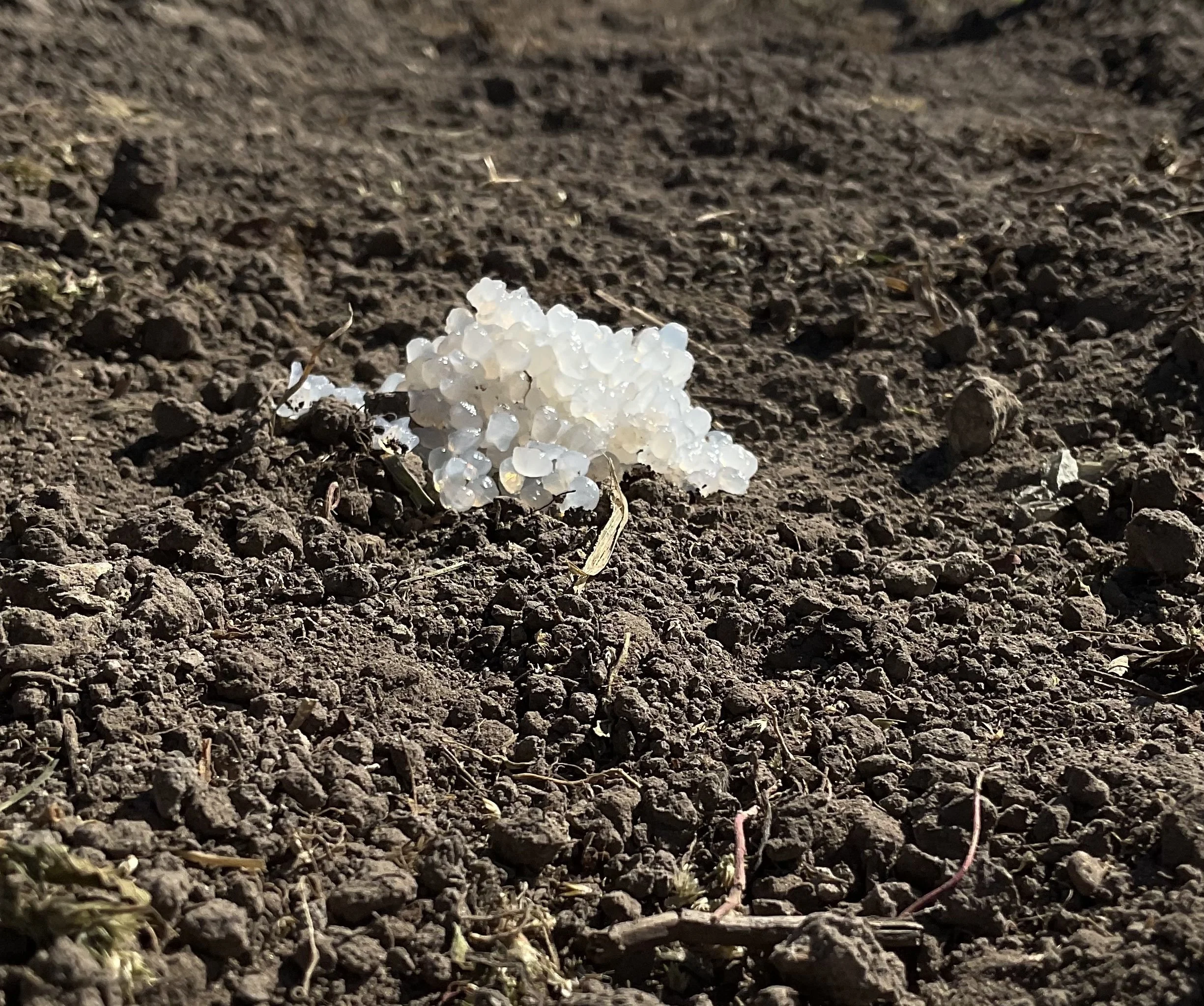
A hydrogel bead is a cross-linked polymer matrix. Think about tapioca, tapioca is a natural biopolymer that usually doesn’t come in the form you see in a bubble tea or pudding. It starts as a powder and then reacts with a chemical solution to form a solid. This is what our BioBeads do, except they aren’t tapioca…
BioBead uses natural and biodegradable polymers to encase our beneficial bacteria and fungi. We can also encase other things. Basically it starts as a powder that is mixed into a solution with our consortium, and then that viscous solution is cross-linked into tiny little solid beads.
-
Our BioBeads offer a microhabitat where bacteria and fungi dwell closely together inside the bead, which offers a protective layer with moisture that keeps them thriving close to the plant roots. By being close to each other and the plant, cross-kingdom synergies are enabled at levels that are not observed if a consortium was applied as a liquid or powder.
For example, our evidence shows that our mycorrhizal fungi grow out of the beads and colonize plant roots better, and our bacteria mobilizes on fungal hyphae to access the plant roots and other pockets of soil. Without the bead construct, which also can help with soil moisture retention, the beneficial consortium can wash out of the system or have a harder time establishing the intended symbiosis that helps with nutrient cycling and plant uptake.
-
BioBead has been tested on several crops at the greenhouse scale and also in the field with our farm collaborators at 21-Acres Farm.
At the greenhouse level, we have positive results for tomatoes, wheat, sunflower, lettuce, and sorghum.
In the field, we have positive results for maize, several varieties of lettuce, and green onions.
Across all crops, BioBead application increases total yield and can reduce fertilizer requirements.
-
BioBead’s commercialization and R&D efforts are funded by several entities including:
The Washington Research Foundation
Research efforts have also been supported by:
The Mycological Society of America
UW’s Program on Climate Change
Further commercialization efforts are also underway, and we are grateful to The Buerk Center for Entrepreneurship for awarding BioBead the 1st Place Award in the Dempsey Start-Up Competition.
-
Biofertilizers and soil amendments are a complex product, and they have a complicated history. Up until the mid 2000’s, scientists didn’t really have access to the tools required to answer questions that allow them to understand how soil biology really works and what could lead to a successful biological input.
This led to people seeing the potential that bacteria and fungi have to be applied to systems that may require their help, but not necessarily the tools and equipment to create and scale a product effectively.
We are currently in the day and age where scientific tools enable new soil discoveries and the ability to scale biological inputs is becoming more accessible.
As a product, BioBead sits right on the cusp of what we know works below ground and the future need for alternative practices. It’s core biology is rooted in what has and has not worked and its advantage stems from pushing the boundaries of soil discoveries.
-
We are interested in speaking to like-minded individuals, agencies, and organizations that are working towards the future of soil health and food security.
BioBead is expanding field trials and working on large-scale product development, please reach out to us if you are looking to discuss potential partnerships, funding opportunities, or research collaborations.